Lock Lid Jars: The Silent Guardians of Freshness
The lock lid jar sits on my kitchen counter, its transparent walls revealing layers of granola within, and I find myself contemplating the quiet miracle of preservation. This simple vessel, with its ingenious sealing mechanism, represents a centuries-long human obsession with defeating time itself, with holding back the inevitable march of decay that claims all organic matter. In the lock lid jar, we witness not merely a storage solution but a small victory against entropy, a defiant gesture in the face of nature’s relentless processes.
The Anatomy of Certainty
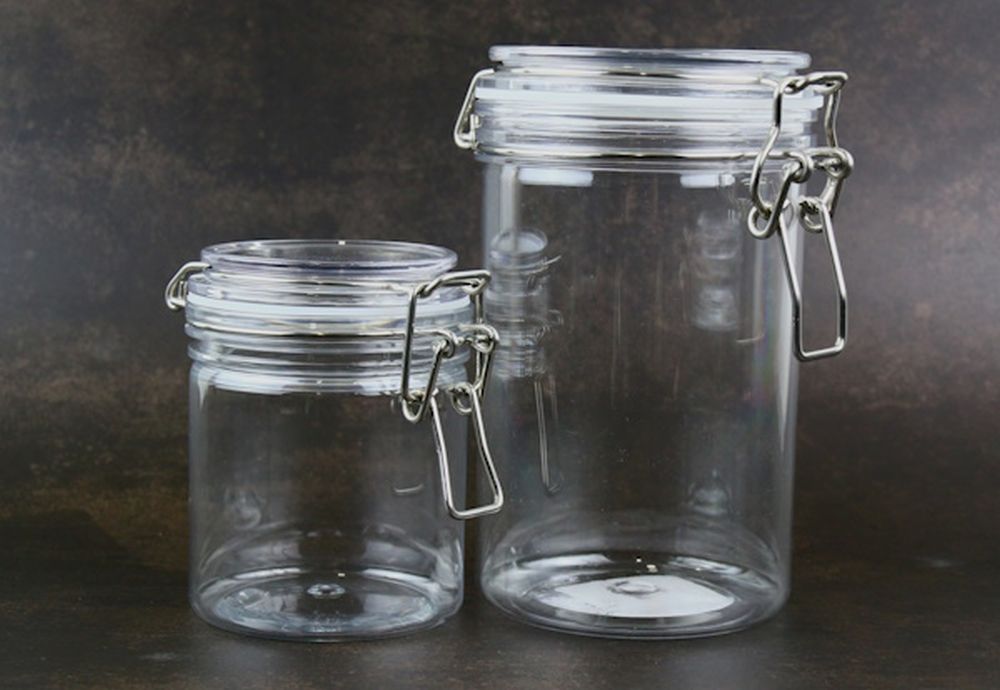
To understand the lock lid container is to appreciate its elegant engineering. The mechanism operates on a principle of controlled pressure, where a rubber gasket compressed between lid and rim creates an hermetic seal. This is not unlike the way our own cells maintain selective permeability, allowing certain molecules passage whilst excluding others. The locking clips, typically hinged metal or sturdy plastic arms, apply uniform pressure around the circumference, ensuring no weak points where air might infiltrate.
Consider the components that make this system function:
- A thick silicone or rubber gasket that moulds to microscopic irregularities in the glass
- Locking mechanisms that distribute force evenly across the sealing surface
- Glass or food-grade plastic bodies that resist chemical interaction with contents
- Wide mouths that facilitate easy access whilst maintaining structural integrity
The beauty lies in the simplicity. Unlike complex machinery that fails when a single component malfunctions, the lock lid jar depends on basic physics: compression, elasticity, and the formation of an airtight barrier.
The Science of Stillness
What occurs within a properly sealed locking jar approaches a kind of suspended animation. Oxidation, that slow fire that browns cut apples and turns oils rancid, slows to a crawl when oxygen cannot replenish itself. Moisture levels stabilise, preventing the hygroscopic dance that makes biscuits soggy and grains mouldy. Temperature fluctuations matter less when external humidity cannot infiltrate.
In Singapore’s tropical climate, where the Agri-Food and Veterinary Authority notes that “high humidity and temperatures accelerate food spoilage and bacterial growth,” the importance of proper storage becomes paramount. A quality lock lid jar creates a microenvironment distinct from the surrounding atmosphere, a small controlled ecosystem where the rules differ from those outside.
The jar becomes a tiny laboratory where we can observe preservation in action. Dried herbs maintain their volatile oils, their aromatic compounds trapped within like memories in amber. Coffee beans exhale their carbon dioxide slowly, protected from the moisture that would leach their flavour. Even delicate items like homemade biscuits retain their texture, protected from the humidity that Singapore’s climate delivers in abundance.
A History Written in Glass
The evolution of the locking lid container traces a path through human ingenuity. From the earliest earthenware vessels sealed with wax and cloth to the nineteenth-century invention of mechanical sealing systems, each iteration represented someone’s attempt to answer an ancient question: how do we make plenty last through scarcity?
The modern iteration, with its precise manufacturing tolerances and food-safe materials, stands on the shoulders of countless experiments, failures, and incremental improvements. It is a small monument to patient problem-solving, to the gradual refinement of an idea across generations.
The Practical Wisdom of Selection
Choosing the right locking jar requires consideration of purpose and context. Glass variants offer complete inertness and allow visual monitoring of contents, though they carry weight and fragility. Their transparency serves a diagnostic function, letting us observe changes that might indicate spoilage. Plastic alternatives provide impact resistance and lighter weight, trading some longevity for practicality.
Size matters profoundly. A jar too large leaves excessive air space, whilst one too small creates inconvenient frequency of refilling. The relationship between contents and container resembles that between patient and treatment: precision in matching improves outcomes.
Applications Beyond the Obvious
The versatility of lock lid storage extends far beyond pantry staples:
- Medical supplies requiring sterile storage conditions
- Craft materials like beads and buttons that must resist humidity
- Photographic chemicals demanding air-tight preservation
- Specimens for educational purposes, preserved in controlled environments
- Emergency supplies maintained in ready condition over extended periods
Singapore’s Institute of Food Technologists emphasises that “proper storage containers are critical in preventing cross-contamination and maintaining food safety standards in both commercial and domestic settings.”
The Philosophy of Preservation
There exists, I believe, something deeply human in our drive to preserve. We are creatures acutely aware of time’s passage, of the gap between harvest and hunger, between plenty and want. The lock lid jar becomes a small rebellion against transience, a way of extending the moment of ripeness, of capturing abundance for later scarcity.
In my own kitchen, these jars line shelves like small monuments to intentionality. Each one represents a decision to be prepared, to value quality over convenience, to participate actively in the preservation of resources. They speak to a kind of domestic mindfulness, an attention to the details that constitute daily life.
Conclusion
The lock lid jar asks little of us: proper closure, appropriate contents, reasonable care. In return, it offers something precious: time. Time before spoilage, time before replacement becomes necessary, time to enjoy ingredients at their peak. This modest contract between human and object exemplifies the best of practical design, where form serves function with quiet efficiency. In understanding what makes these containers work, we participate more fully in the ancient, ongoing human project of preservation, wielding the lock lid jar as both tool and testament to our persistent hope that what is good might remain so.